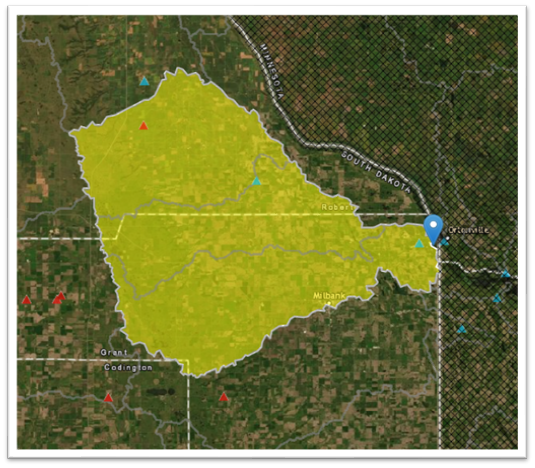
The Whetstone River is a tributary of the Minnesota River, approximately 35 miles long, beginning in the Coteau des Prairies region in South Dakota. Historically the Whetstone River flowed into the Minnesota River just south of Ortonville. The river was diverted into Big Stone Lake in the 1930’s to increase Big Stone Lake levels during times of drought. The Whetstone River currently flows into Big Stone Lake, just upstream from the Big Stone Lake Dam.
In recent years, high flows have caused flooding in Big Stone Lake, with the Whetstone River contributing a substantive amount of water. The Upper Minnesota River Watershed District (UMRWD) plans to restore ecological services by reestablishing continual flow to an estimated 9,000 feet of open channel known as the Whetstone River Restoration Project.  The UMRWD’s proposed Whetstone River Restoration Project is located in the abandoned historic Whetstone River channel south of Ortonville. This historic channel was abandoned after the1930’s diversion and currently only has flows from adjacent land.
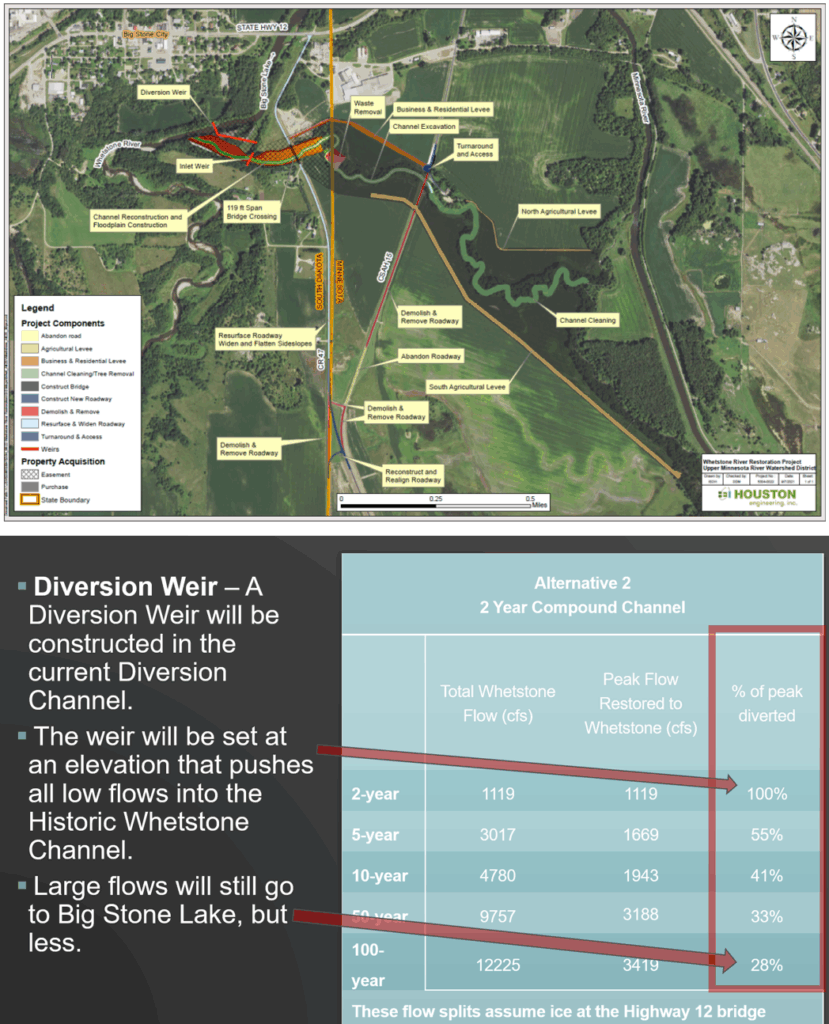
The Whetstone River Restoration will hydrologically and ecologically reconnect a portion of the Whetstone River to the Minnesota River.
By default, this will improve conditions within Big Stone Lake reducing nutrient loads, improving water quality and reducing flooding.
In addition, the project will restore floodplain wetlands for additional flood storage, duck and wildlife habitat, as well as restore a wildlife corridor allowing fish passage upstream.
2024 Funding Update – Pending 2025 legislative action, the project will have secured all funding necessary for construction in MN and SD.
2025 Update– The UMRWD is currently working on obtaining project approvals from the USACE and various state agencies in Minnesota and South Dakota. Preliminary design plans were submitted to the USACE in late 2022 to continue working through their individual permitting process.
An EA-EAW was completed in early 2023.
As part of the permitting process, analysis was recently submitted on the potential impacts of the project (at the request of the USACE).
Questions can be directed to our Executive Director, Amber Doschadis at 320-839-3411 or [email protected]
2026 Update
Whetstone Restoration: Laying the Groundwork While Permits Are Pending
The Upper Minnesota River Watershed District (UMRWD) is making significant strides toward restoring a portion of the Whetstone River to its historic channel. This partial restoration will reduce peak flood elevations on Big Stone Lake by roughly one foot during major flood events. Fish passage and wildlife habitat will improve along with notable water quality benefits to the lake.
Why Restoration Is Needed
In the 1930s, the Whetstone River was diverted into Big Stone Lake to maintain higher lake levels for recreation and commerce. While well-intentioned, this diversion has led to decades of challenges—flashy runoff, flooding, and declining water quality in Big Stone Lake. Several of the largest flood events on Big Stone Lake have occurred within the last 30 years, underscoring the need for action.
Permits and Funding
“The District has secured full funding for the entire restoration project, thanks to support from state/ federal agencies and local partners”, Doschadis states “We are still working through complex permitting requirements and related authorizations with the U.S. Army Corps of Engineers and other regulatory agencies to ensure the project does not cause adverse downstream impacts.”
What We’ve Done So Far
In 2025, UMRWD completed a major waste remediation project adjacent to a portion of the historic channel that will be reconnected as a part of the future project. The remediation included the removal of surface debris and installation of an engineered soil cover system to stabilize the site and protect water quality. This was a critical first step in preparing the area for future restoration.
What’s Next: Tree Clearing Before April 1
Before future channel reconstruction can take place, trees need to be cleared from the designated restoration corridor. This work needs to be completed by April 1, 2026, to comply with federal guidelines protecting the Northern Long-Eared Bat, as they become active after that date.
“Clearing trees this winter ensures we comply with long eared bat requirements while guaranteeing that construction can begin promptly after permits are finalized, avoiding costly delays” explained Doschadis.
The trees to be removed are in areas that will require re-grading to restore the river’s historic channel and improve floodplain function, while much of the smaller brush consists of non-native or invasive species such as buckthorn.
Doschadis wants to stress that “Once restoration is complete, the District will evaluate opportunities to replant trees in suitable locations farther from the channel to support long-term habitat and stability, while protecting the function of the river.”